Create a Source
Modified on: 2025-05-15 11:25
TABLE OF CONTENTS
- Step 1: Navigate to Create A Source
- Step 2: Source Creation
- Step 3: Source Category Configuration (Optional)
- Step 4: Source Implementation
- Related User Guides:
Step 1: Navigate to Create A Source
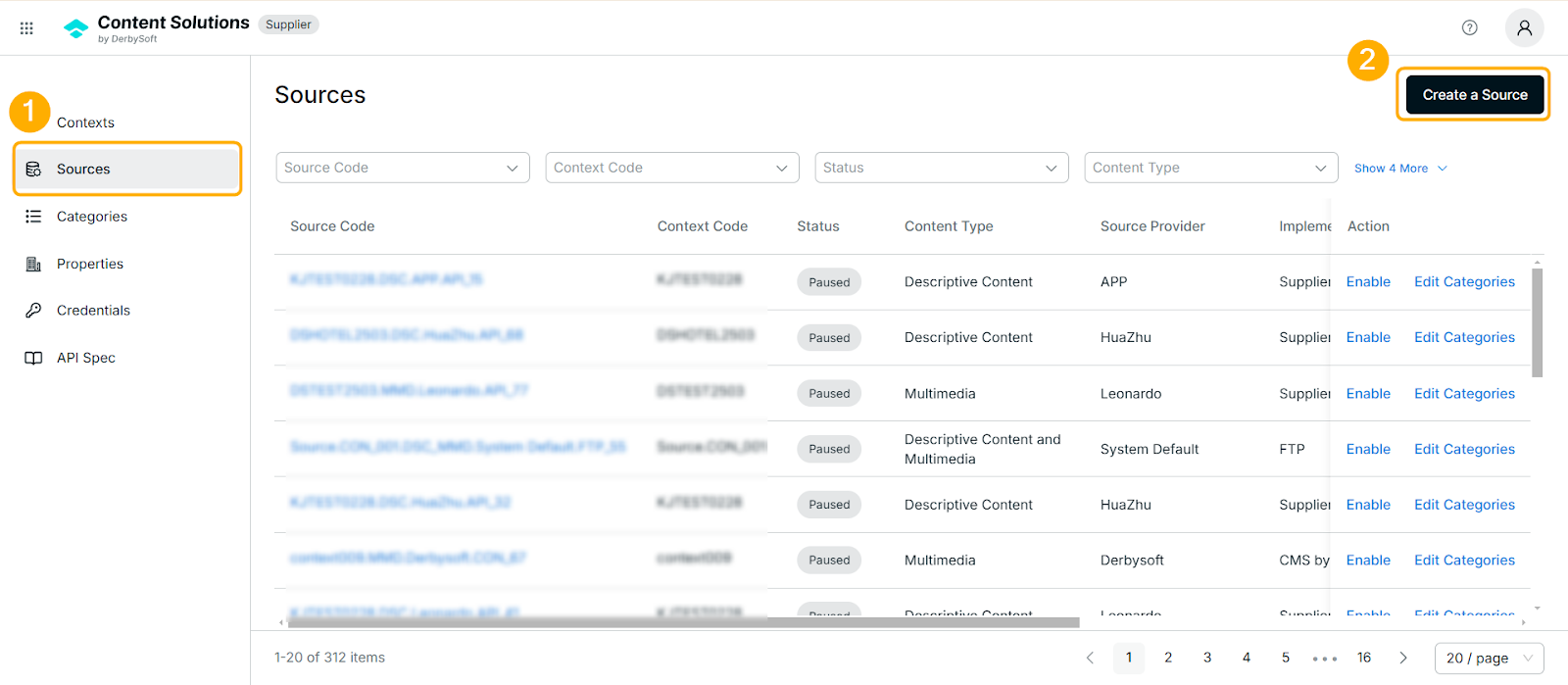
- Go to Sources > Create a Source
Step 2: Source Creation
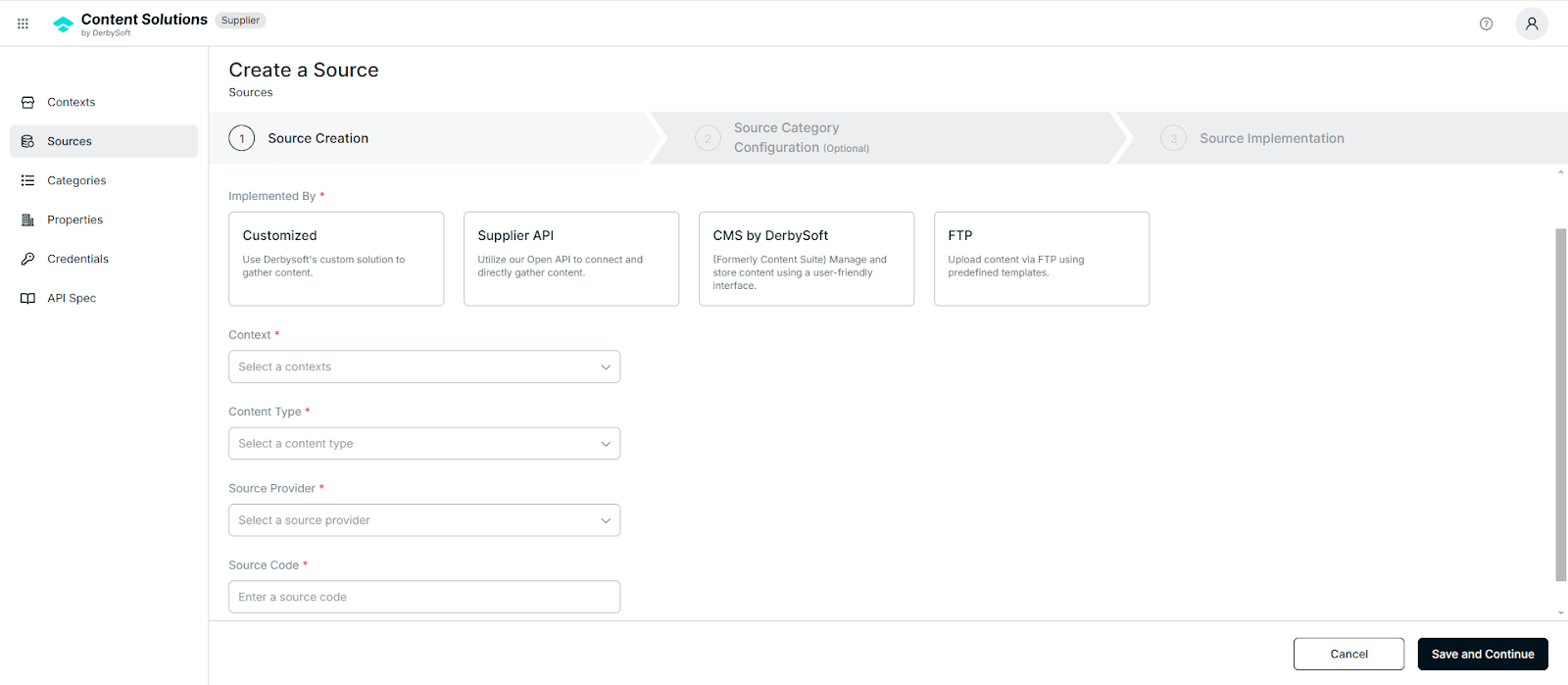
One Context can support multiple sources, but each source type has specific implementation rules and limitations:
| Implemented By | Customized | Supplier API | CSM by DerbySoft | FTP |
|---|---|---|---|---|
| Customized | √ | × | × | × |
| Supplier API | × | √ | × | √ |
| CMS by DerbySoft | × | × | √ | × |
| FTP | × | √ | × | √ |
- Implemented by
- Customized: DerbySoft connects to a customized API.
- Supplier API: The source connects to DerbySoft through the DerbySoft Content Supplier API.
- CMS by DerbySoft: (Formerly known as Content Suite) allows direct content management through DerbySoft's CMS.
- FTP: The source connects through a customized file.
- Context: Links the source to a context for content targeting.
- Content Type: Specify whether the source will provide only descriptive content, multimedia or also include multimedia content (e.g., images)
- Source Provider: Identifies the external system or vendor supplying the content
- Source Code: Automatically generated unique identifier for tracking and auditing the source
- Primary Source: Flags whether this is the main source for the chosen context
- Primary Language: Set the default language for the primary source’s property content.
Step 3: Source Category Configuration (Optional)
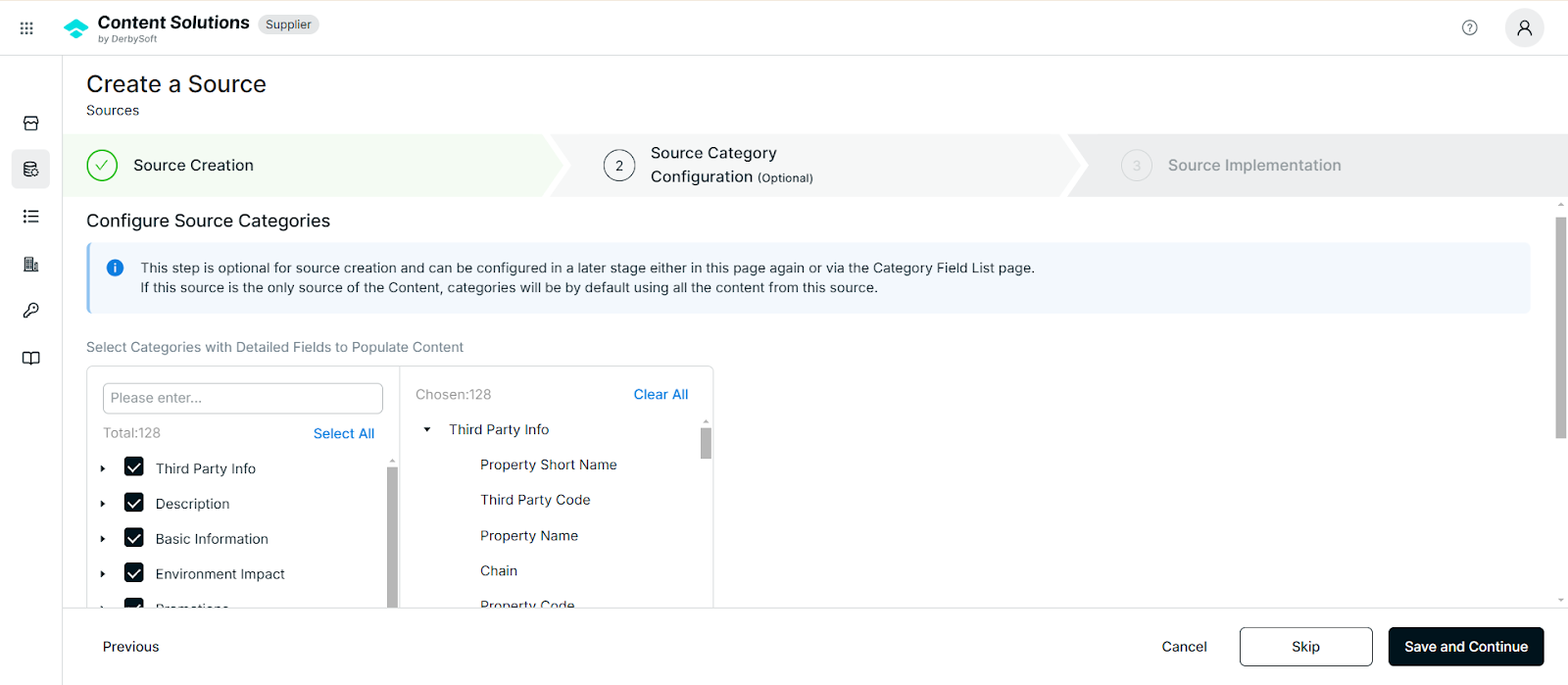
- Purpose: Defines the collection rules for the source data.
- If Basic Information is selected, the system will collect data from the source.
- Otherwise, the source data will not be collected.
- Configuration Flexibility:
- This step is optional during source creation.
- You can configure this later, either on this page or via the Category Field List page.
- If this source is the only source of content, the system will default to using all content from this source.
Step 4: Source Implementation
- Customized Source: Proceed with offline implementations.
- Supplier API Source:
- Navigate to Credentials.
- Generate new credentials.
- Apply the credentials to the new Supplier API source.
- CMS by DerbySoft
- Access the content management system (CMS) by DerbySoft portal.
- Start managing and updating your property content in the content management system.
- FTP
- Apply credentials to the engineers. Please provide contextual information and the source code.
- Send credentials to suppliers and let them process testings.
- Following successful data transmission, review property list details on the portal as necessary. Access Detailed Implementation Guide
Related User Guides:
What is Property
Property Management
What is Context
Context Onboarding Procedures
How to Create a Context
View Existing Contexts
What is Source
Editing Source Status & Configuration
Category Assignment
Credential Management
Did you find it helpful? Yes No
Send feedbackSorry we couldn't be helpful. Help us improve this article with your feedback.